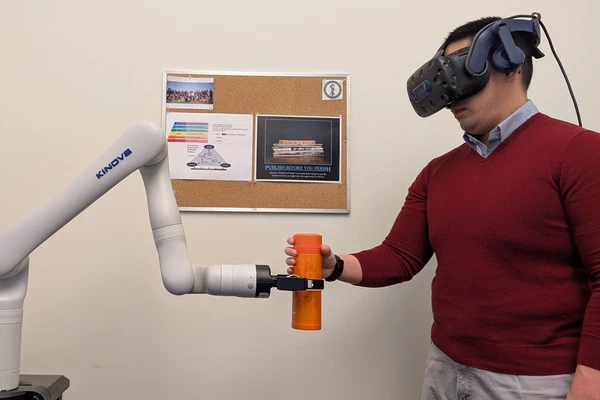
Virtual reality and psHRI
Virtual reality is a powerful tool to achieve contextually-rich interactions while maintaining a low-cost environment for studying psHRI.
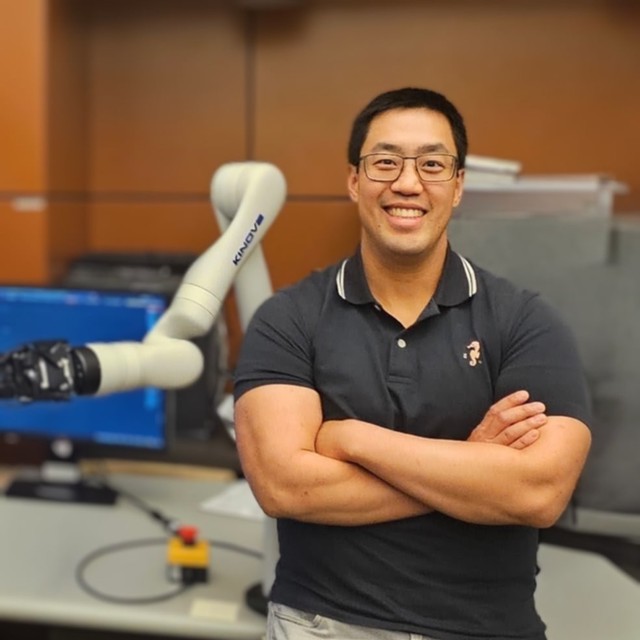 🤖
🤖I am Chris Yee Wong, an assistant professor in the Department of Mechanical, Industrial and Aerospace Engineering (MIAE) and the director of the Living with Assistive and Interactive Robots (LAIR) Lab at Concordia University in Montreal, Canada.
The overall goal of my research is to develop robotic assistants for safe, comfortable, and intuitive autonomous physical and social human-robot interaction (psHRI) in the areas of home care, retail, manufacturing, or healthcare. My current research arc involves different aspects of psHRI with humanoid, mobile, and manipulator robots, particularly by examining a) how a robot can infer intention and react appropriately depending on the context by using a multimodal analysis of human posture, gesture, touch, emotional state, physiological signals, environmental signals, etc; b) how robots can be placed in the retail space to enhance and assist the shopping experience of those who might have visual or mobility impairments; and c) how virtrual reality can be used in psHRI.
I am also developing the foundations of Sensor Observability Analysis, a novel way of performing generalized kinematic analysis of distributed axial sensors on articulated robots. My past research involved automation of single cell micromanipulation, quadruped robot control, and hexapod robot leg design.
I am also passionate about teaching using evidence-based techniques, the scholarship of teaching and learning, mentoring, and helping people become better versions of themselves.
On my spare time, I’m a hobbyist maker with my own Etsy store (with corporate clients) and I’m involved in coaching elite youth and university-level dragon boat in the Montreal area. Although my blog Ramblings of a PhD is only occasionally updated, it has recorded some of my thoughts from having started a career in academia.
Feel free to contact me by email: christopheryee[dot]wong[at]concordia[dot]ca
(Note that this website is still a work in progress. Please use the links to my ResearchGate and LinkedIn profiles for a more detailed portfolio.)
Virtual reality is a powerful tool to achieve contextually-rich interactions while maintaining a low-cost environment for studying psHRI.
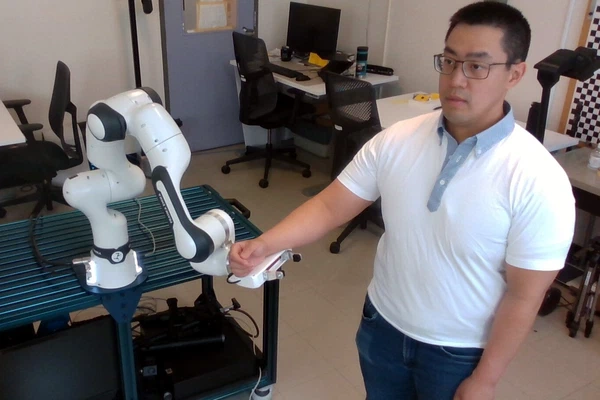
How and where a robot grasps a human may elicit different emotional responses from the human. What are the key factors and how can robots deliberately exploit these emotional responses to achieve a desired reaction?
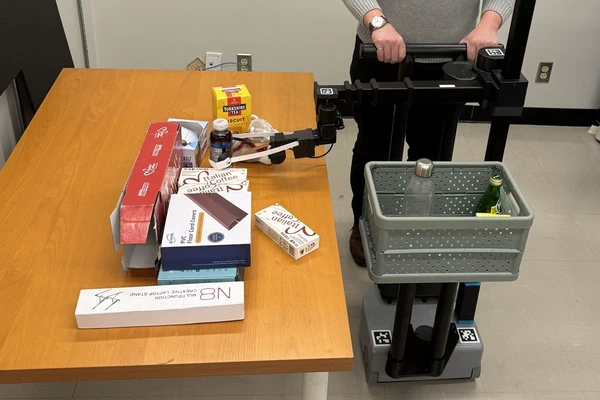
Exploring the use of robots in retail spaces to assist shoppers, especially to help those may have visual or mobility impairments.
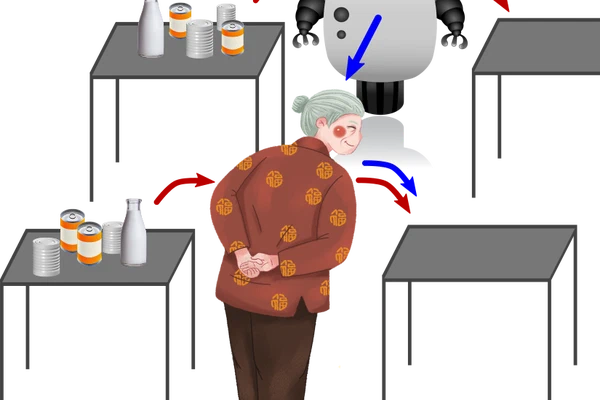
Users must feel comfortable when interacting with robots prior to mass adoption. This early-stage project involves examining several factors that may involve interactions between robots and humans, especially the elderly.
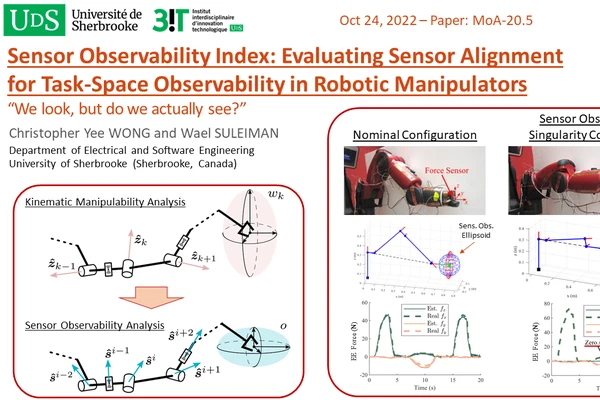
Sensor Observability Analysis aims to quantify the quality of sensor observations of task-space quantities based on the robot configuration.
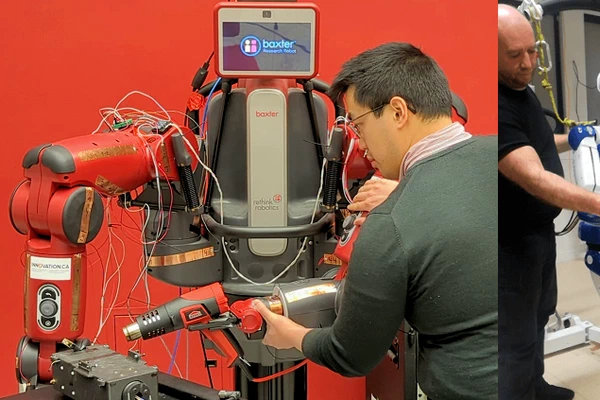
Development of pHRI techniques with a particular focus on multimodal touch interpretation and intention detection for the goal of achieving safe, comfortable, and intuitive autonomous pHRI.
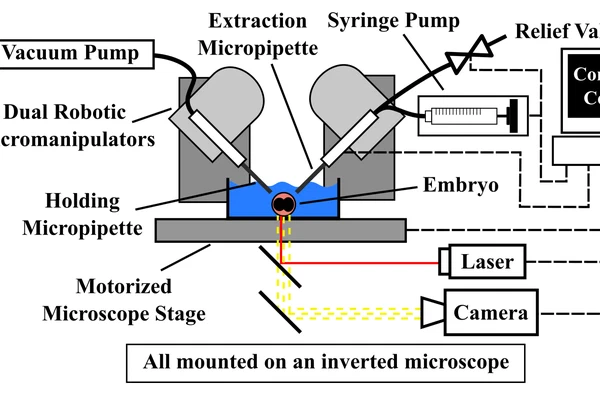
Automating single cell surgery and manipulation techniques on early-stage embryos, particluarly related to pre-implantation genetic diagnosis (PGD).
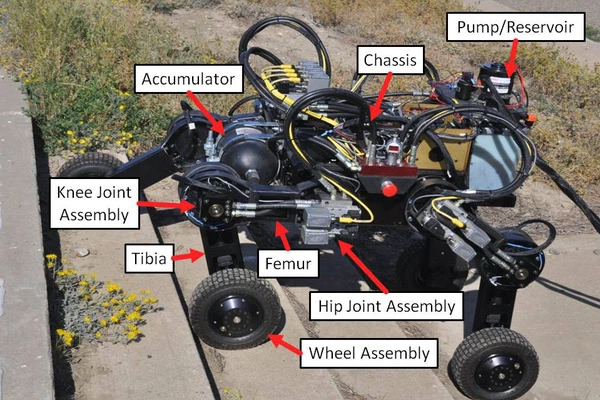
Posture reconfiguration and step climbing maneuvers for the hybrid wheel-legged quadruped Micro-Hydraulic Toolkit (MHT). In collaboration with Defense Research and Development Canada (DRDC) Suffield
Students interested in joining the Living with Assistive and Interactive Robots (LAIR) Lab should fill out the following form: https://forms.gle/H4XP71DNuWq7Y6fy9
Prior to filling out the form, make sure that you know what you are looking for, specific topics that you are interested in, and how they relate to my work.