
👩🏼🏫 Teach academic courses

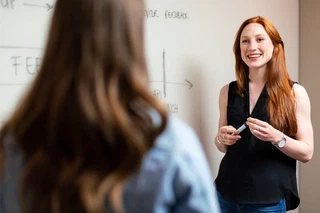 Embed rich media such as videos and LaTeX math
HugoBlox Kit is designed to give technical content creators a seamless experience. You can focus on the content and the HugoBlox Kit which this template is built upon handles the rest.
Embed videos, podcasts, code, LaTeX math, and even test students!
On this page, you’ll find some examples of the types of technical content that can be rendered with Hugo Blox.
Citation
Here’s an example of citing a publication using the cite shortcode:
You can also use the default view by omitting the view parameter:
Video
Teach your course by sharing videos with your students. Choose from one of the following approaches:
Youtube:
{{< youtube D2vj0WcvH5c >}}
Bilibili:
{{< bilibili BV1WV4y1r7DF >}}
Video file
Videos may be added to a page by either placing them in your assets/media/ media library or in your page’s folder, and then embedding them with the video shortcode:
{{< video src="my_video.mp4" controls="yes" >}}
Podcast
You can add a podcast or music to a page by placing the MP3 file in the page’s folder or the media library folder and then embedding the audio on your page with the audio shortcode:
{{< audio src="ambient-piano.mp3" >}}
Try it out:
Test students
Provide a simple yet fun self-assessment by revealing the solutions to challenges with the spoiler shortcode:
{{< spoiler text="👉 Click to view the solution" >}}
You found me!
{{< /spoiler >}}
renders as
👉 Click to view the solution
Math
HugoBlox Kit supports a Markdown extension for $\LaTeX$ math. Enable math by setting the math: true option in your page’s front matter, or enable math for your entire site by toggling math in your config/_default/params.yaml file:
features:
  math:
    enable: true
To render inline or block math, wrap your LaTeX math with $...$ or $$...$$, respectively.
Example math block:
$$
\gamma_{n} = \frac{ \left | \left (\mathbf x_{n} - \mathbf x_{n-1} \right )^T \left [\nabla F (\mathbf x_{n}) - \nabla F (\mathbf x_{n-1}) \right ] \right |}{\left \|\nabla F(\mathbf{x}_{n}) - \nabla F(\mathbf{x}_{n-1}) \right \|^2}
$$
renders as
$$\gamma_{n} = \frac{ \left | \left (\mathbf x_{n} - \mathbf x_{n-1} \right )^T \left [\nabla F (\mathbf x_{n}) - \nabla F (\mathbf x_{n-1}) \right ] \right |}{\left \|\nabla F(\mathbf{x}_{n}) - \nabla F(\mathbf{x}_{n-1}) \right \|^2}$$Example inline math $\nabla F(\mathbf{x}_{n})$ renders as $\nabla F(\mathbf{x}_{n})$.
Example multi-line math using the math linebreak (\\):
$$f(k;p_{0}^{*}) = \begin{cases}p_{0}^{*} & \text{if }k=1, \\
1-p_{0}^{*} & \text{if }k=0.\end{cases}$$
renders as
$$ f(k;p_{0}^{*}) = \begin{cases}p_{0}^{*} & \text{if }k=1, \\ 1-p_{0}^{*} & \text{if }k=0.\end{cases} $$Code
HugoBlox Kit utilises Hugo’s Markdown extension for highlighting code syntax. The code theme can be selected in the config/_default/params.yaml file.
```python
import pandas as pd
data = pd.read_csv("data.csv")
data.head()
```
renders as
import pandas as pd
data = pd.read_csv("data.csv")
data.head()
Inline Images
{{< icon name="python" >}} Python
renders as
Python
Did you find this page helpful? Consider sharing it 🙌

I am Chris Yee Wong, an assistant professor in the Department of Mechanical, Industrial and Aerospace Engineering (MIAE) and the director of the Living with Assistive and Interactive Robots (LAIR) Lab at Concordia University in Montreal, Canada.
The overall goal of my research is to develop robotic assistants for safe, comfortable, and intuitive autonomous physical and social human-robot interaction (psHRI) in the areas of home care, retail, manufacturing, or healthcare. My current research arc involves different aspects of psHRI with humanoid, mobile, and manipulator robots, particularly by examining a) how a robot can infer intention and react appropriately depending on the context by using a multimodal analysis of human posture, gesture, touch, emotional state, physiological signals, environmental signals, etc; b) how robots can be placed in the retail space to enhance and assist the shopping experience of those who might have visual or mobility impairments; and c) how virtrual reality can be used in psHRI.
I am also developing the foundations of Sensor Observability Analysis, a novel way of performing generalized kinematic analysis of distributed axial sensors on articulated robots. My past research involved automation of single cell micromanipulation, quadruped robot control, and hexapod robot leg design.
I am also passionate about teaching using evidence-based techniques, the scholarship of teaching and learning, mentoring, and helping people become better versions of themselves.
On my spare time, I’m a hobbyist maker with my own Etsy store (with corporate clients) and I’m involved in coaching elite youth and university-level dragon boat in the Montreal area. Although my blog Ramblings of a PhD is only occasionally updated, it has recorded some of my thoughts from having started a career in academia.
Feel free to contact me by email: christopheryee[dot]wong[at]concordia[dot]ca
(Note that this website is still a work in progress. Please use the links to my ResearchGate and LinkedIn profiles for a more detailed portfolio.)